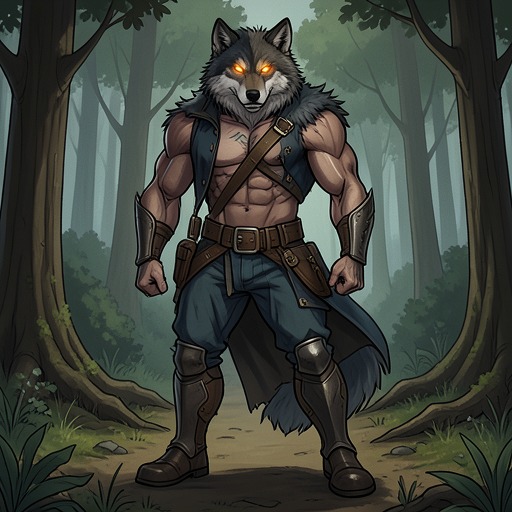
Full-Moon Transformation Constraint
The Vampire Prince’s BrideFull-Moon Transformation Constraint is the rule that the full moon exerts an exceptional and sometimes unavoidable power over werewolves. It governs more than a physical change of shape: it can overwhelm judgment, amplify aggression and sexual instinct, endanger pregnant humans carrying werewolf children, and require an Alpha or a whole pack to organize life around a predictable period of heightened risk. Across the narrative, the full moon is both a biological condition and a social pressure, exposing how supernatural identity is managed when the human mind and the animal self no longer remain securely separate.
Definition and Operation
The constraint operates most visibly through the loss of conscious control. Roland explains that pack members who were originally human cannot keep their wits when their wolves emerge under the full moon, even though the moon’s influence does not excuse the danger their behavior creates. This is why the pack needs Roland as its Alpha: his authority is not merely ceremonial, but a practical safeguard against actions the transformed werewolves would regret after sunrise. The rule therefore links bodily transformation to pack hierarchy, making Alpha leadership a form of containment as well as command.
The full moon does not affect every werewolf in exactly the same way. Werewolves can shape at will, but the moon’s magic is described as wild and unusually strong, and its influence is particularly pronounced during the three nights of the full moon. The compound becomes crowded during that period because the community anticipates the loss of restraint. The result is an atmosphere in which fights may erupt with little warning, while mates may also act on overwhelming physical desire and seek privacy until the episode passes. The same force that produces violence can intensify intimacy, making the full moon a recurring pressure on both public order and private bonds.
Reproduction and Inherited Consequences
The constraint also determines whether a pregnancy can safely continue. Roland tells Claire that the child she carries is a werewolf and will transform during the full moon. The fetus’s transformation is presented as the reason Melissa was unable to carry pregnancies to term and as an explanation for the rarity of werewolf births. Claire therefore faces a danger that is not limited to childbirth: the next full moon may cause a miscarriage before the pregnancy reaches term. The rule turns reproduction into a biological hazard and forces Claire to decide whether to accept that risk at all.
This reproductive consequence gives the full moon a generational dimension. The transformed child is already subject to the supernatural cycle before birth, while the human mother bears the physical vulnerability. Werewolf reproduction consequently depends on more than desire or compatibility; it is shaped by a recurring lunar event that can determine whether a family exists. The moon’s power becomes a hidden condition behind pack efforts to produce children and behind the grief surrounding repeated pregnancy loss.
Community, Ritual, and Containment
The constraint structures werewolf communal life. At the New York Pack’s compound, families with children may live apart from humans until the children are old enough to control their preternatural abilities, but the full moon draws pack members back into a shared environment. The compound’s crowded three-night cycle creates a temporary concentration of bodies, instinct, conflict, and mating behavior. Safety is therefore collective rather than purely personal: secluded homes, communal buildings, Alpha supervision, and pack customs all respond to the same lunar recurrence.
The rule also appears in ritualized challenges and tests of identity. Harrod’s Alpha trial takes place beneath a bright full moon, with Harrison positioned across the pit, the entire den gathered around them, and the wolves watching in their natural forms. Siobhan is the only human presence, while Harrod’s father and Grandpa observe from a projecting cliff. Grandpa’s howl marks the beginning of the confrontation, turning the moonlit setting into a public test of succession and recognition. The full moon thus does not only unleash the wolf; it provides the charged setting in which a werewolf’s authority can be proved before the community.
Social and Narrative Consequences
The rule repeatedly converts private situations into matters of governance. A full-moon gathering can become a site of brawling, uncontrolled sexual behavior, or accidental harm, while an Alpha must anticipate conduct that the participants themselves may not remember or control. The constraint also complicates human–werewolf relations: Claire learns that Roland’s apparent human identity conceals a condition with legal, reproductive, and physical consequences, and the revelation changes the meaning of their intimacy as well as the future of her pregnancy.
The same pattern appears in the broader supernatural world, where bodily compulsion is often placed beside institutional rules. The contrast is sharpest when the full moon is treated as both unavoidable force and something communities attempt to regulate. The lunar cycle cannot simply be argued away, yet its consequences can be contained through pack attendance, Alpha authority, separation from vulnerable humans, and preparation for transformation. The narrative’s tension comes from the gap between those systems of control and the moments when instinct overwhelms them.
Significance
Full-Moon Transformation Constraint is significant because it makes werewolf identity a recurring negotiation between agency and inheritance. The werewolves are not defined only by possessing an animal form; they are defined by living under a calendar that periodically changes what their bodies can do and what their minds can govern. The rule explains pack hierarchy, shapes the compound’s social rhythm, threatens human pregnancy, and supplies the setting for Alpha recognition.
Its deepest effect is to make transformation collective. The moon reaches individuals through flesh, hormones, fear, aggression, and reproduction, but its consequences spread through families and institutions. It can place a human mother at risk, compel an Alpha to protect a community from itself, or turn a succession trial into a ritual witnessed by an entire den. In that sense, the full moon is not merely a supernatural trigger. It is the mechanism through which the story tests whether identity, love, parenthood, and authority can survive the return of the wolf.